Bachelors Barge Club and the rise of Philadelphia scholastic rowing
Bachelors Barge Club played a central role in Philadelphia high school rowing from the sport’s earliest organized years. Members such as Cipriano Andrade, Jr., Garrett Gilmore, and Edward T. Stotesbury helped shape major milestones, including the 1897 founding of the Interscholastic Association of Oarsmen; the 1927 Stotesbury Regatta; the Scholastic Rowing Association of America; support for public, private, and girls’ high school rowing programs; and innovative learn-to-row and competitive youth programs.
Origins of Youth Rowing
Before organized scholastic rowing emerged in the late nineteenth century, youth rowing already existed in the United States though it was generally not tied to schools. Young men learned to row through work on ferries, fishing boats, shipyards, docks, and small craft, as well as through family, neighborhood groups, informal boat clubs, colleges, and organized rowing clubs.
One of the paradoxes of the development of high-school athletics is that schools didn’t really invent interscholastic sports, Students did. Before the late 1890s, high school athletics were largely informal student activities rather than organized school programs. For much of the nineteenth century, schools did not generally sponsor competitive sports; students created their own baseball clubs, football teams, rowing crews, track clubs, and athletic associations. They chose captains, collected dues, secured equipment, and arranged competitions themselves. In this sense, schools did not invent interscholastic sports so much as later formalize activities students had already organized.
By the 1880s and early 1890s, these student-led sports were becoming more organized, but they still operated largely outside school oversight. This raised concerns for educators: eligibility rules were unclear, older students and outsiders sometimes competed, football drew criticism for unsafe practices, and some contests were linked to gambling, intense rivalries, and heavy time commitments without faculty supervision.
Challenges establishing Scholastic Rowing
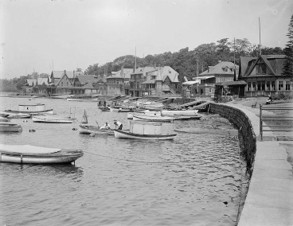
By the late nineteenth century, rowing had become one of Philadelphia’s defining sports, anchored by Boathouse Row and organized under the influence of the Schuylkill Navy. Local universities, including Penn, already maintained active rowing programs, but younger high school students had no consistent framework for training or competition.
In the late 1890s, as independent student-led interschool competition spread nationwide high schools began formally adding sports and creating interscholastic athletic conferences. Rowing was harder to support than most sports such as baseball, basketball or football because crews needed costly wooden shells, oars, maintenance, storage, coaching, boathouse access, transportation and regatta management—resources many schools could not provide on their own.
Birth of Organized Scholastic Rowing in Philadelphia
Philadelphia’s organized scholastic rowing movement began on February 6, 1897, through cooperation between student oarsmen and the city’s established rowing institutions. Cipriano Andrade Jr., an adult member of Bachelors Barge Club whom contemporary newspapers called the movement’s “prime promoter,” helped students establish interscholastic competition. That day, representatives from eight area schools met at Bachelors Barge Club to form the Association of Scholastic Oarsmen, elect student officers, draft governing documents, racing rules, and schedule a June 5 regatta on the Schuylkill.
With support from the Schuylkill Navy, rowing clubs and the University of Pennsylvania, the new association gained administrative guidance, safety standards, and access to facilities, equipment and coaching that would otherwise have been beyond the reach of many students and schools. It was established to regulate, promote, and organize competitive rowing among all interested students from local high schools. Charter Members included students from Philadelphia area High Schools such as Penn Charter, Northeast Manual, Central Manual, Roman Catholic, Central High School, and DeLancey, alongside Chester High School.
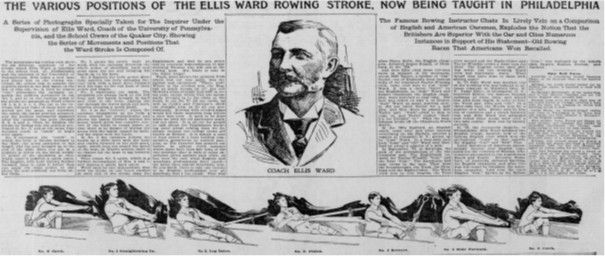
The Association of Interscholastic Oarsmen served as a bridge between student-run athletics and formal school governance. Founded in 1897 under the student-led model common in nineteenth-century school sports, combined with the active support from the Philadelphia rowing community, gave students the necessary organizational framework to support scholastic rowing before Philadelphia schools created a broader interscholastic athletic authority. As administrators assumed greater control over eligibility, scheduling, supervision, and school representation, this independent student association became less necessary. After the Philadelphia Interscholastic League formed in 1901 and added crew to its official schedule in 1902, scholastic rowing began a transition to a more school-directed structure.
The Association of Interscholastic Oarsmen was remarkably influential during its brief existence.
- The association’s first regattas, beginning in 1897, are widely considered Philadelphia’s first official scholastic rowing competitions.
- The organization provided an early model for high school sports governance, especially in rowing.
- It helped standardize regatta rules and procedures for local and regional championship racing.
- The Schuylkill Navy soon incorporated scholastic events into its own regattas.
- In 1902, the Philadelphia Public High School Interscholastic League made crew an official sport.
- In 1903, the American Henley Regatta was established in Philadelphia as a national race and included the Franklin Challenge Cup as a national championship for scholastic eights.
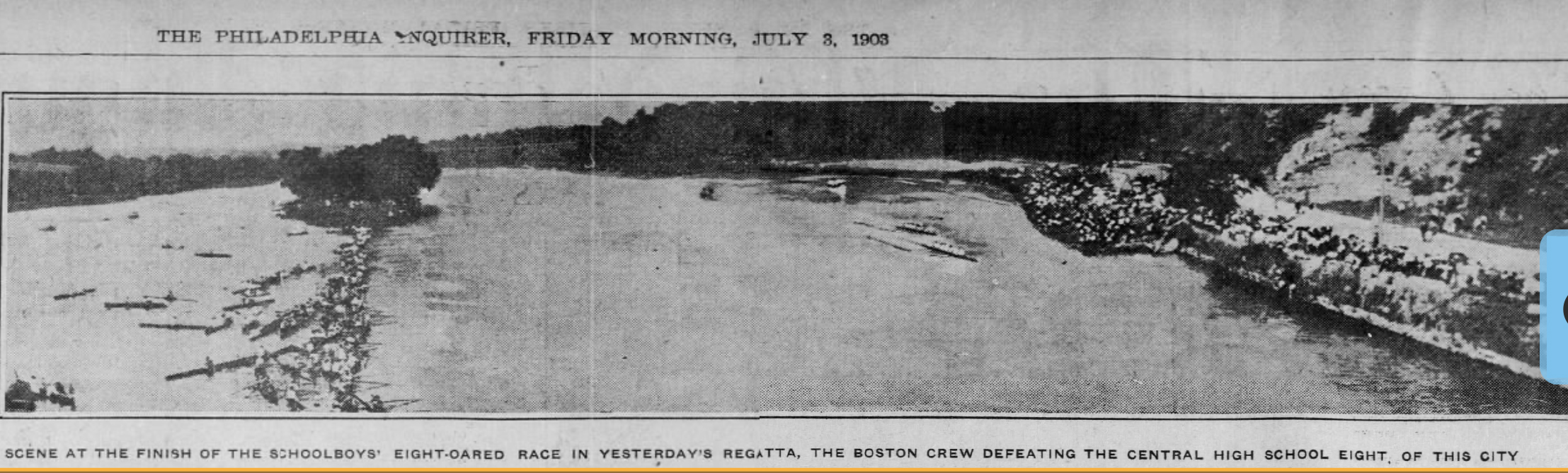
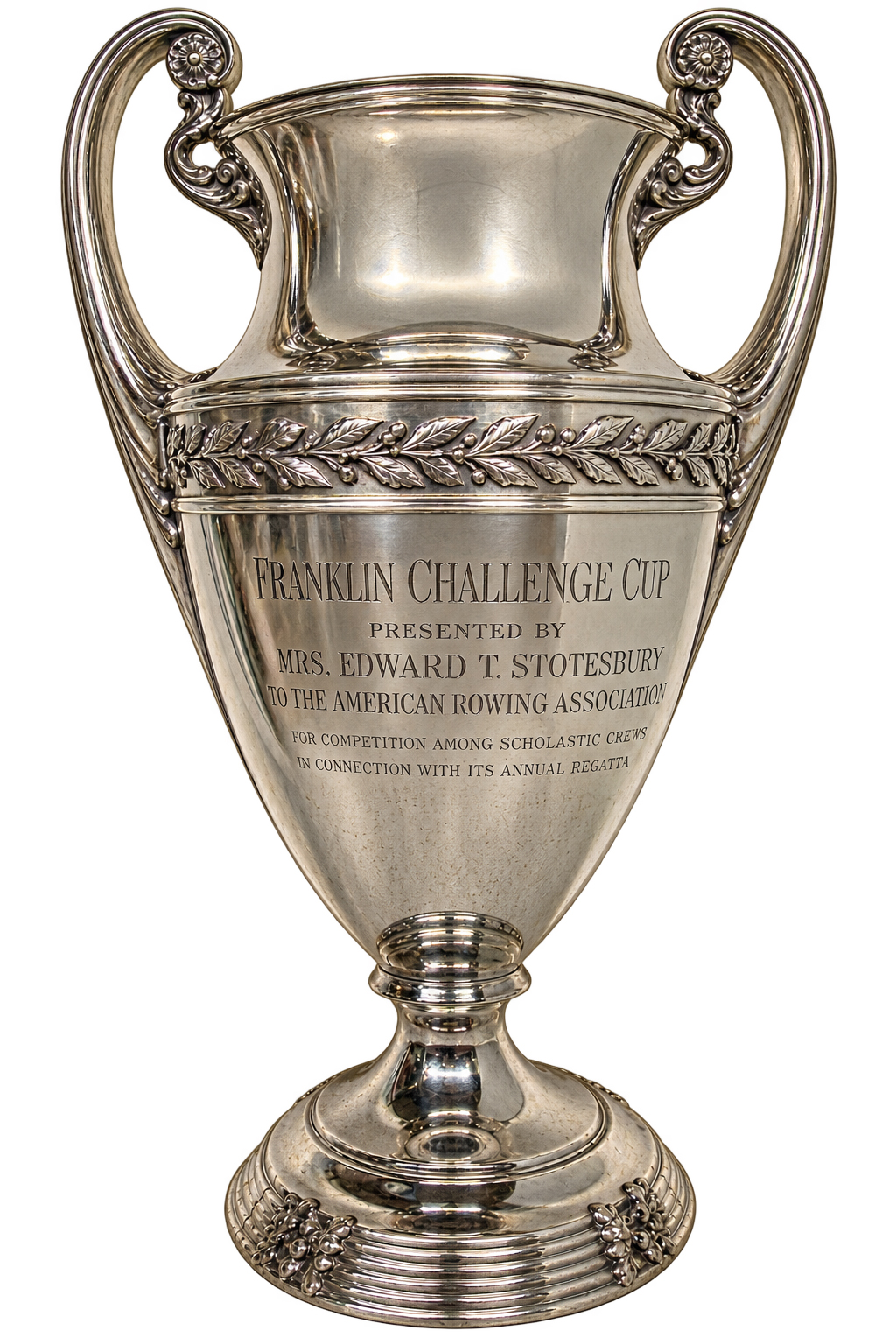
The American Henley Franklin Challenge Cup for scholastic eights was introduced at the first American Henley race in Philadelphia in 1903. Sometime after 1912, Mrs. Edward T. Stotesbury replaced the original trophy with the cup shown on the left. Newspaper accounts report that she personally presented it to winning crews at regattas, including in 1929.
1897 to 1927: Scholastic Rowing in Philadelphia
The introduction of scholastic rowing to public, private, and Catholic schools across the United States encountered considerable obstacles stemming from high costs and complex logistical requirements. Even in Philadelphia – a city renowned for its rowing tradition and bolstered by the Schuylkill Navy, rowing clubs, distinguished coaches, Olympians, and support from the University of Pennsylvania – the establishment of scholastic rowing between 1897 and 1926 achieved only limited success.
In 1921, after public schools exited Philadelphia’s scholastic rowing competitions, the local rowing community joined forces to keep the sport alive for private and Catholic schools. Olympians John B. [Jack] Kelly Sr. and Garrett Gilmore supported the Catholic and private school efforts, respectively, which helped drive new enthusiasm for high school rowing.
The exit of public schools from Philadelphia’s nascent scholastic rowing scene was a watershed moment and a catalyst for the sport’s introduction (in some cases reintroduction) at Inter-Academic and Catholic League schools. In February 1922 club captain Garett E. Gilmore announced that Bachelors’ hired Frank Muller away from Vesper. Among Muller’s duties would be to coach Episcopal Academy and Penn Charter. Gilmore’s reasoning was ‘not only to try to build up this club, but also to boost schoolboy rowing in this city.’ In spring 1922, Episcopal Academy broke the one-mile schoolboy record at the 1922 American Henley winning the Franklin Challenge Cup national championship for scholastic eights.
In January 1926, at a meeting of the Schuylkill Navy, a special committee presented a report regarding the revival of schoolboy rowing. The next day, it was announced in the press that local rowing clubs would offer rowing opportunities at no cost to either the schools or the students.
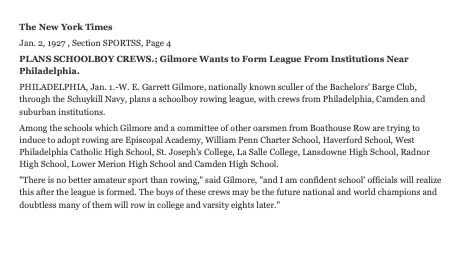
In early 1927, the Schuylkill Navy officially announced plans to establish a Schoolboy Rowing League in the Philadelphia area.
Stotesbury Regatta Established 1927
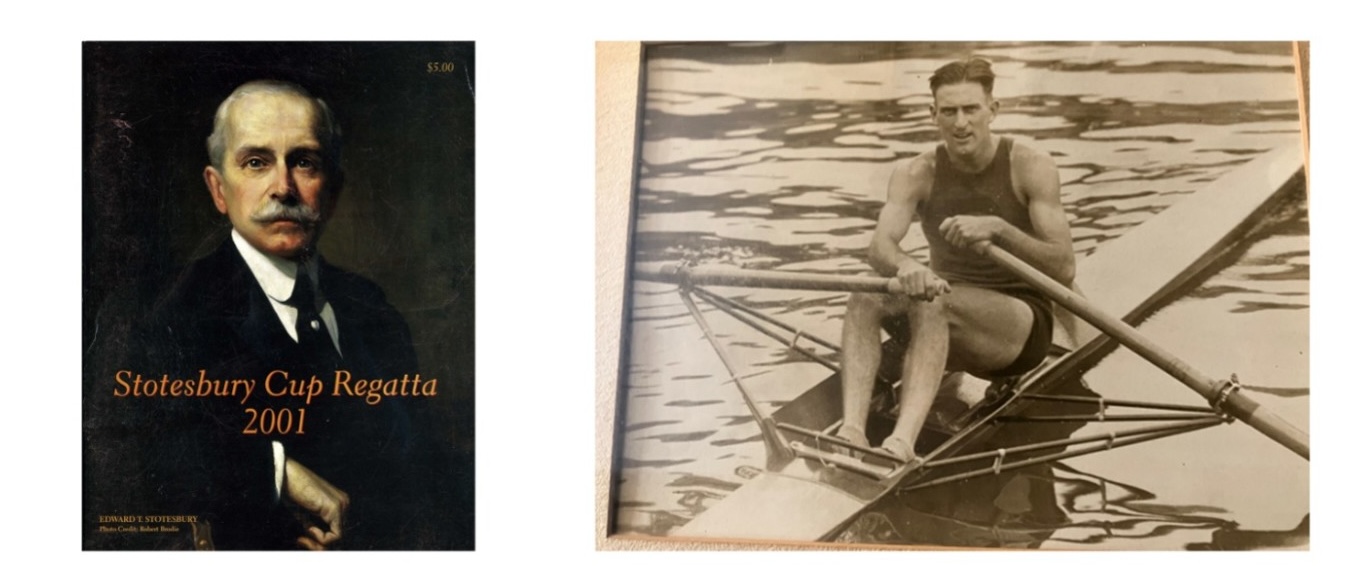
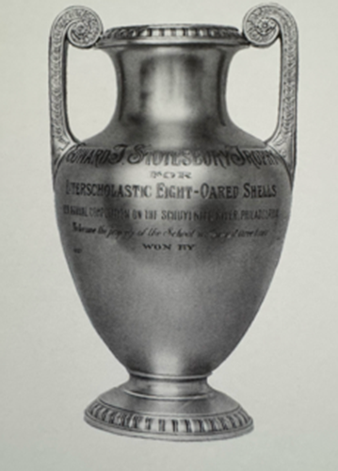
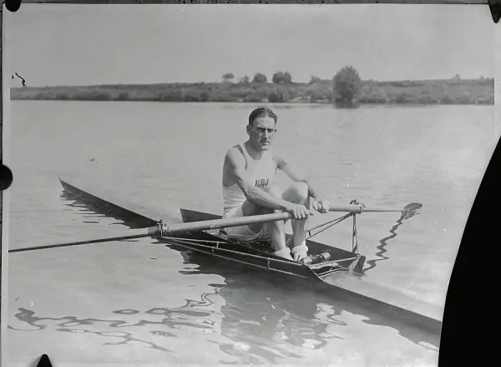
Special Collections Center, Temple University Libraries
Following the official announcement of plans for a Schoolboy rowing league in the Philadelphia area, the Schuylkill Navy was tasked with organizing a corresponding local regatta.
In early 1927, Olympian and Bachelor Barge Club member Garrett Gillmore approached Edward T. Stotesbury, a distinguished Philadelphia financier, philanthropist, and president of the club regarding funding for a Philadelphia high school rowing regatta. Stotesbury agreed to sponsor a trophy for the Boys Senior Eight race.
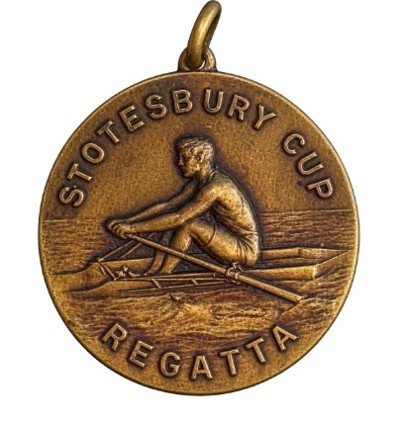
In May 1927, the Schuylkill Navy inaugurated the first Stotesbury Cup Regatta, which is now the oldest and largest high school rowing competition worldwide, attracting approximately 200 schools from both the United States and abroad.
- The Stotesbury Cup Regatta began in 1927 as a boys’ senior eights race on the Schuylkill River.
- Under the leadership of Olympian Garrett Gilmore during its formative years, the Stotesbury Regatta progressively developed into a multi-event racing format.
- When the American Henley Regatta stopped holding national scholastic races in 1932, the Stotesbury began welcoming competitors from across the country, which led to its growth beyond Philadelphia.
1935: New National Scholastic Regatta Founded by Garrett Gillmore
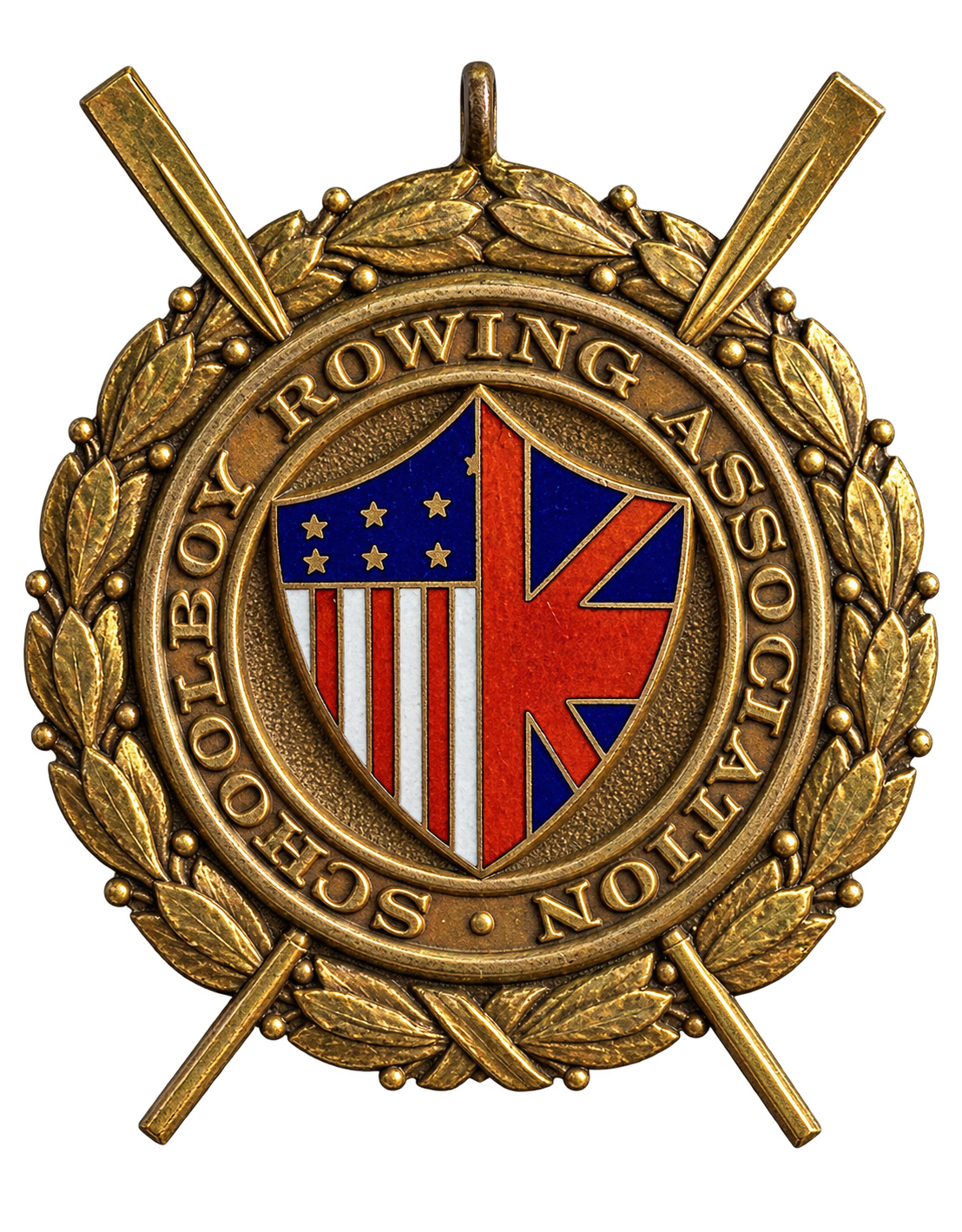
When the American Henley Regatta stopped holding national scholastic races in 1932, there was a need to establish a replacement national championship scholastic regatta. On May 14th, 1935 W.E. Garrett Gilmore founded the Schoolboy Rowing Association of America. The association was formed to foster schoolboy rowing and to stage an annual regatta open to all schools of the world, the winner to be recognized as North American Champions.The first regatta was conducted in May of 1935 and has been held every year since.
When women started competing in 1974, the name was changed to Scholastic Rowing Association of America (SRAA®) in 1976 to reflect the addition of women. The primary function of the SRAA® is to run the Scholastic Championship Regatta each May. High school athletics does not allow sporting events to be held which decide national champions. This regatta, nevertheless, is informally recognized by the rowing community as a national championship.
The SRAA® has been the principal source of rules and procedures governing high school rowing. The association has helped many emerging high school crew programs by providing both sound advice and helpful contacts within the rowing community.
Return of Local Philadelphia Public-School Rowing after WWII
From 1897 to 1921, several Philadelphia public high schools, such as Central High and West Philadelphia High, had successful rowing teams. In 1921, the School District discontinued rowing programs due to costs. Subsequent attempts to restore public school involvement were not successful.
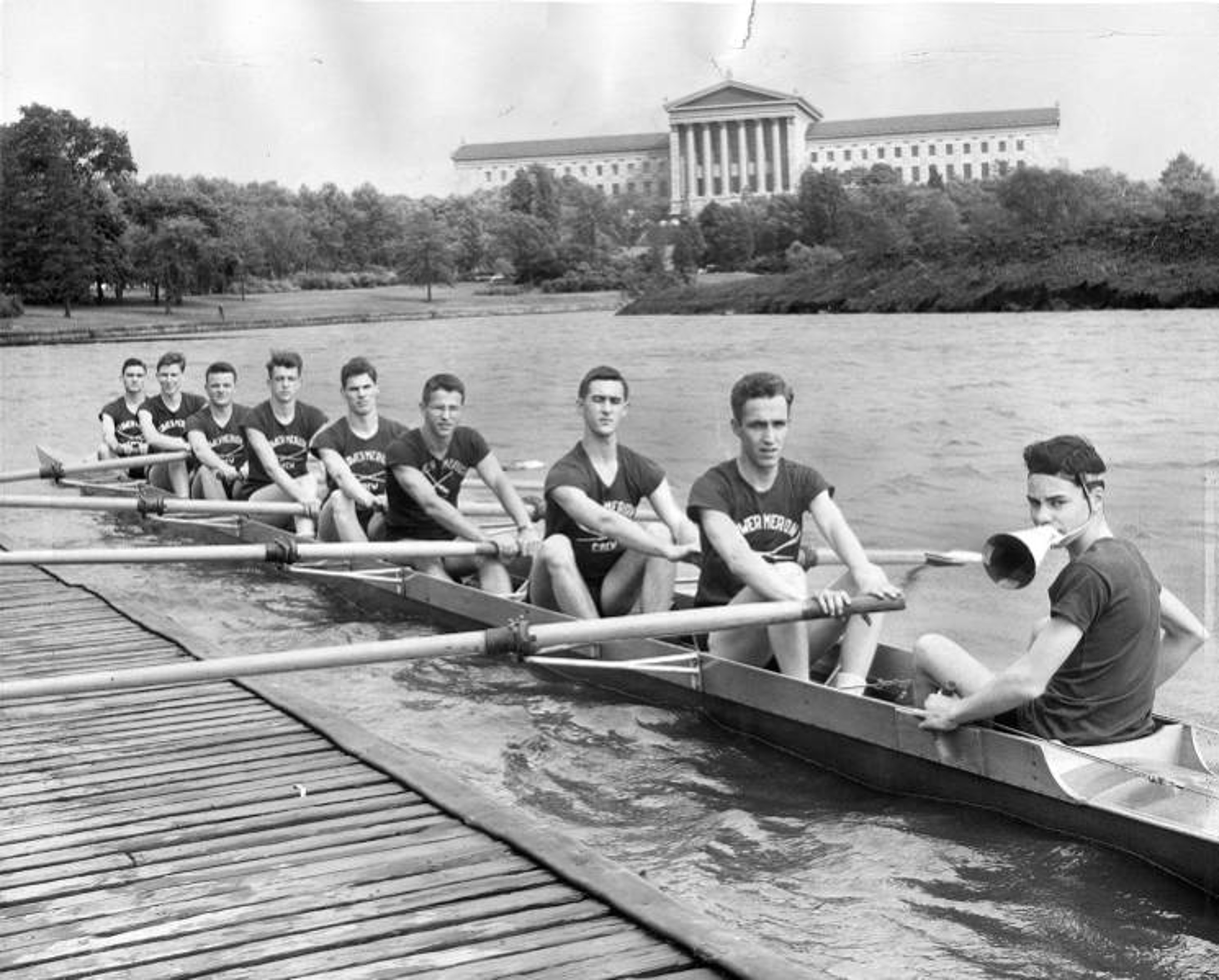
In 1947, Garrett Gillmore helped establish two Philadelphia suburban public schools’ rowing programs—Lower Merion and shortly after Harriton High School—at Bachelors Barge Club. Both schools claim to be among the oldest public high school rowing teams in the United States.
Special Collections Center, Temple University Libraries
Establishment of Philadelphia Scholastic Girls Rowing
In 1967 Baldwin Girls School was established at Bachelors Barge Club with support from Garrett Gillmore. Baldwin claims to be the first girls high school rowing program in the Philadelphia area and likely one of the earliest in the United States.
Return of Philadelphia High School Rowing Participation
In 2009, Boys’ Latin Charter School, established at Bachelors Barge Club, became the first Philadelphia public high school since 1921 with a rowing program. (Separately, in the same year, Philadelphia City Rowing was formed and now provides rowing programs and competition for all students in Philadelphia.)
Bachelors Boathouse Facilities and Youth Rowing
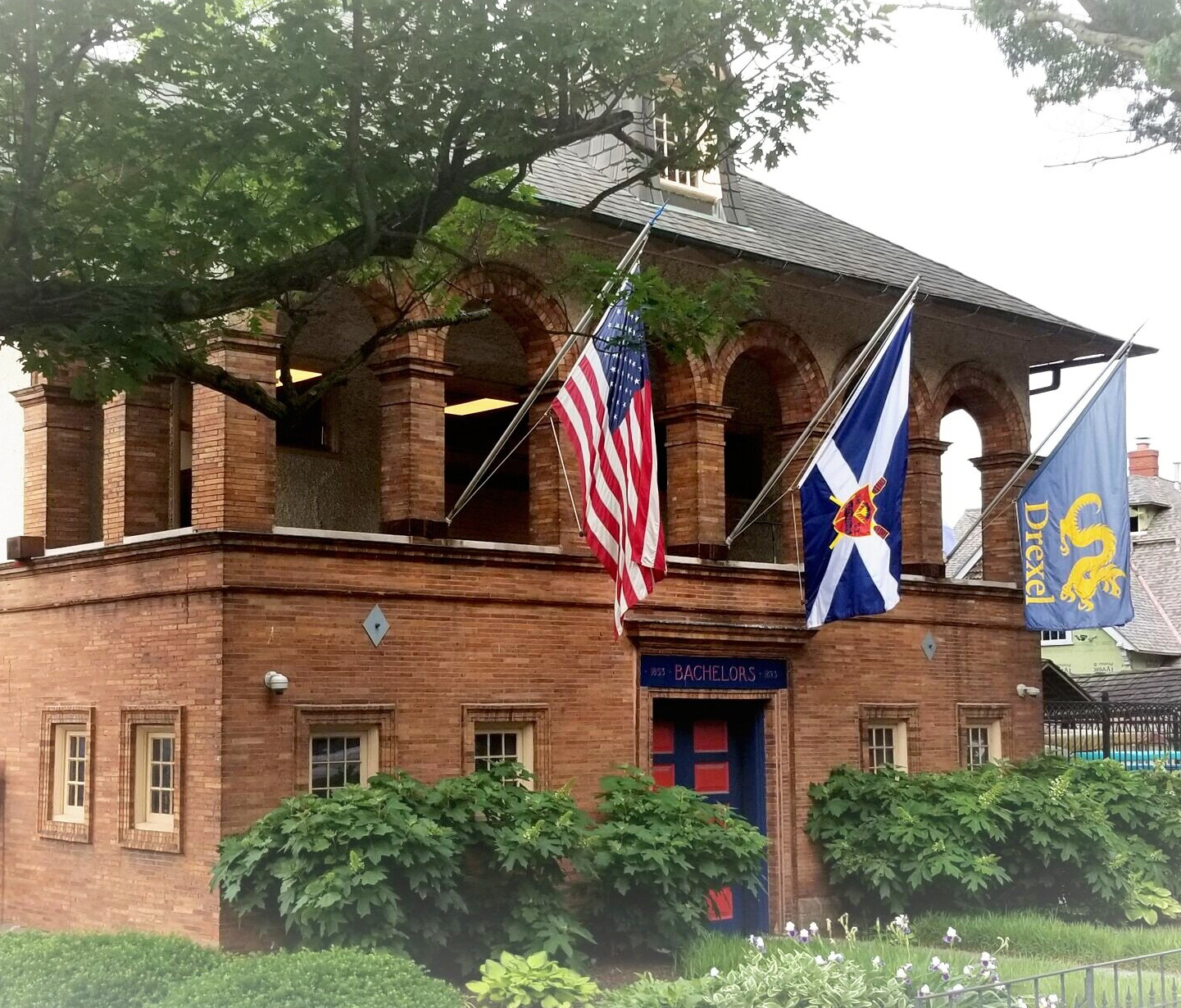
For more than a century, the Bachelors boathouse has served as a home for high school crews and club-run youth learn-to-row and competitive programs.
these text sections to tell the parts of your story. Illustrate it with appropriate images. You can adjust the width (span) of the image and the text to create different sizes and layouts.